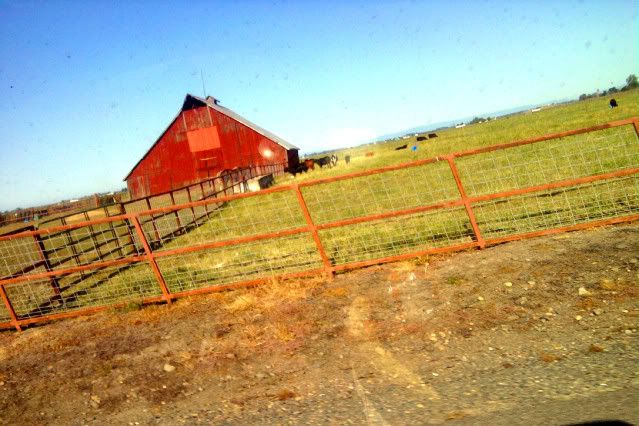
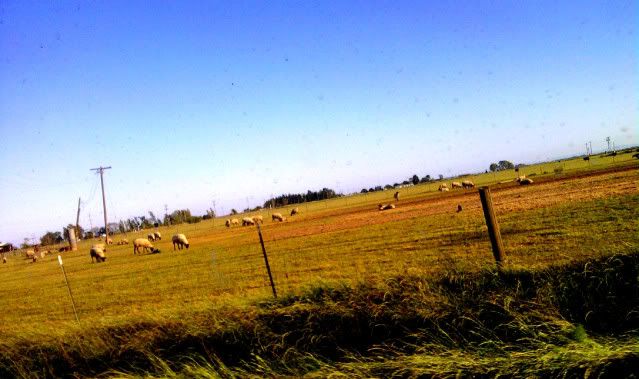
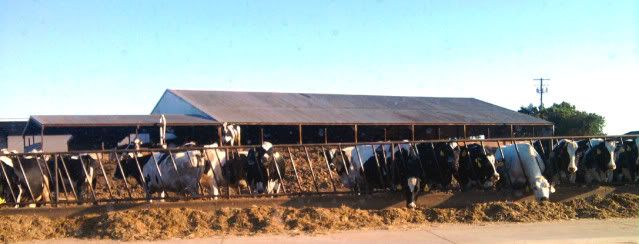
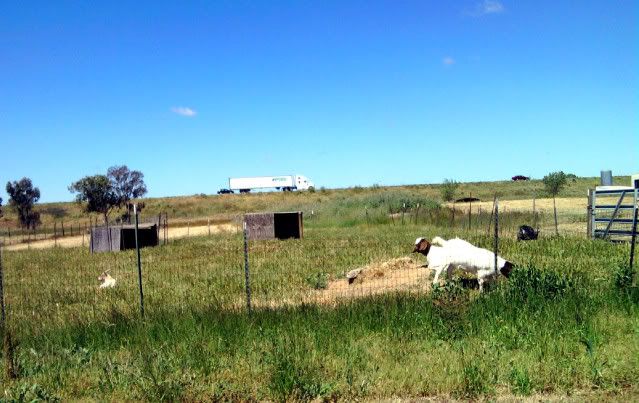
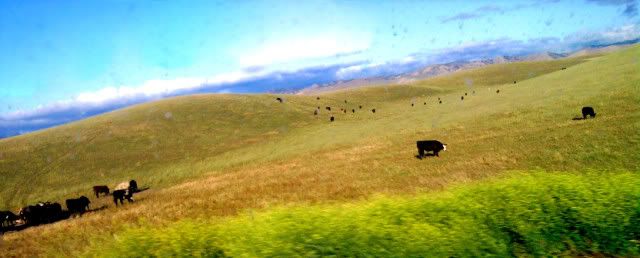
Fresno, Elk Grove and Clayton, Ca. This has been my life on the road for the past 2 weeks. I'm thankful for the opportunities that have come my way, but-- It's Great to be Home!!
Showing posts with label local farms. Show all posts
5.17.2010
Cows and Hotels
Fresno, Elk Grove and Clayton, Ca. This has been my life on the road for the past 2 weeks. I'm thankful for the opportunities that have come my way, but-- It's Great to be Home!!
3.26.2010
The Great Grocery Smackdown

I've never been a fan of Wal-mart, that's a fact. I always saw them as a major contributor to the problem of American obesity. They sell food... however until now it was always pre-packaged and high in fat and calories. (for the most part.) It was also far from sustainable and did not do anything to support local growers, which in turn beats down the environment (shipping, trucking, oil, etc.)
I just read the most uplifting article about the company. Wal-mart is making big changes. They are beginning to sell fresh produce from local farms. They are carrying organic milk and cage free eggs. The food is comparable to what you might find at Whole Foods in quality, and a lot of it comes from the same places! Walmart is able to charge lower prices because they are so huge and they can guarantee the growers that they will buy their crops. This is happening at the supercenters, and I don't frequent any Walmart supercenters, so I really wasn't able to see this for myself. However, in the small towns where Walmarts are a big thing, the Supercenter is what they get. I am officially impressed. It seems that Walmart does a lot behind the scenes and they don't really brag about it. Many props to the guys in charge - thank you for doing your part to give less-than-wealthy Americans some better options.
Check out the article on MSN!
.
11.10.2009
Hungry for Change?
This movie is incredibly important, hopefully it will open the eyes of consumers in this country. Americans are so focused on saving money that they never stop to think about where the products they buy are coming from... or how they were produced. Please check it out if you have even an ounce of compassion. Check it - Food, Inc.
8.23.2009
Veg Out
The past few weeks have taught me exactly how serious I am about my choice to be veggie. I've gotten pretty emotional talking about it and I've realized that it's harder and harder to sit by and watch when other people eat meat. I don't think I'm comfortable cooking it anymore either. It actually makes me a little physically sick to do so. I'm drawing another line now, well really a few lines... I will no longer buy or prepare anything with meat in it. I'm cutting out eggs too, yea, even the cage free variety. Milk is more difficult, cuz so many foods are made using the stuff. I only drink soy milk, and I'm trying out soy cheese now, but I don't know WHAT I'm gonna do about ice cream. That might kill me.
Jeff asked me if I could ever go Vegan. I said yes. Here's me slowly making my way in that direction. I will also no longer say I don't want to talk about it because it makes others uncomfortable. If someone asks, they should be prepared to hear what I think. Now I feel like I'm hiding wonderful knowledge if I keep my mouth shut.
Thanks Dad, for being obnoxious enough to piss me off and cause me to research more thoroughly. You've really opened my eyes.
Jeff asked me if I could ever go Vegan. I said yes. Here's me slowly making my way in that direction. I will also no longer say I don't want to talk about it because it makes others uncomfortable. If someone asks, they should be prepared to hear what I think. Now I feel like I'm hiding wonderful knowledge if I keep my mouth shut.
Thanks Dad, for being obnoxious enough to piss me off and cause me to research more thoroughly. You've really opened my eyes.
7.22.2009
Warning, this could piss you off... Just the facts.
I became a vegetarian primarily because I have a soft spot in my heart for animals. I believe that most mass produced beef, pork, chicken and even fish is a direct result of animal cruelty. From what they are fed, to the hormones they are injected with to their terrible living conditions.. It makes me sad and sick to my stomach. I can live my life free from the guilt that most non-vegetarians never even notice - because they have never stopped to look at the facts. I just want people to be informed, I'm not trying to switch anyone over. However, I do tend to have more respect for a person who can respect all living, breathing things.
I did some research the other day and found that being a vegetarian comes with many more perks than I ever imagined. I'm not even gonna go into animal cruelty here, that's a given, and researching that on your own should suffice. Health is number one. But it also comes down to the destruction of our environment, the money we could save, and the humans we could save from starvation. If every American cut back on even 2 meals a week containing meat, many of the world's problems could be solved. We were brought up this way, it's not our fault, we say... but we can also make better choices as adults. Arm yourself with the facts. You'll feel better about yourself.
Some statistics
Over a billion cattle populate the earth, with a combined weight greater than the entire human population. They are sustained unnaturally in these numbers to satisfy demand for their flesh. They are a primary cause for the destruction of the environment. Beef cattle return only 1 pound of meat for every 16 pounds of grain and soybeans they are fed, causing huge inefficiencies in food utilization, while millions of people go hungry.
Animal-based diets are high in saturated fat, excessive protein and cholesterol, leading to heart disease and stroke, nearly 50% of all deaths in the U.S.
It takes about 2,500 gallons of water to produce a single pound of meat. According to Newsweek, "The water that goes into a 1,000 pound steer could float a destroyer." In contrast, it takes only 25 gallons of water to produce a pound of wheat.
The world's cattle alone (not including other livestock) consume food enough for 8.7 billion people. Over a hundred million of tons of grain go to animals while only 5 million tons of grain could adequately feed the 15 million children throughout the world who starve to death every year. By feeding grain to livestock, we lose 90% of the protein, 96% of the calories, 99% of its carbohydrates, and 100% of the fiber.
A meat-eating American needs 3-1/4 acres of cultivated farm land per year; vegetarians only require 1/6 acre per year.
Meat contains no essential nutrients that cannot be obtained in higher quality directly from plant sources.
Meat would cost over $35/lb. if the water used by the meat industry were not subsidized by the U.S. government. Livestock production accounts for twice the pollution of industrial sources in the U.S.
Trees are being cut at an alarming rate to clear land for meat production. If tomorrow people in the U.S. switched to vegetarian,, 200 million acres could be returned to forest.
Meat-centered diets are linked to many kinds of cancer, such as cancer of the colon, breast, cervix, uterus, ovary, prostate, and lung.
U.S. livestock produces 20 times the excrement of the human population.Their waste no longer serves to fertilize pastures a little at a time, since they spend much or all of their lives in factory sheds or feedlots. Wastes are often simply flushed away dangerously raising ammonia and nitrate levels in our drinking water. Going vegetarian helps to clean up our nation's water more than any other single action.
On a calorie basis, spinach has 14 times the iron of sirloin steak. Animal products are deficient in vitamin C which is needed for iron absorption, .
Cattle are responsible for 12% of the methane emissions. Methane contributes to global warming by trapping 25 times more solar heat than carbon dioxide.
Cattle grazing destroyed most of the lush ecosystems in North America. Grazing is the primary cause for the loss or endangerment of plant species in the U.S.
Factory-farmed animals have as much as 30 TIMES more saturated fat than yesterday's free-range, pasture-raised animals.
Meat contains about 14 times more pesticides than plant foods; dairy products more than 5-1/2 times.
A vegetarian diet helps prevent diabetes, often relieves the symptoms, and can even eliminate the need insulin treatments.
Agricultural engineers discovered that the energy costs of producing poultry, pork and other meats was over 10 times that of any plant food.
Nearly all toxic chemical residues in the American diet (95% to 99%) come from animal sources.
Our dwindling water supply is directly tied to meat consumption. Over half of the water in the U.S. irrigates land for livestock feed and fodder.
An acre cultivated in spinach yields 26 times more protein than it does for beef.
Demand for ocean fish contributes to over 200,000 deaths of marine mammals and birds caught in fishing nets every year.
To help end the controversy over whether humans are carnivores, consider that it is not common for a person to stalk a wild animal, catch it by sinking claws into its body, bite its neck, and feel comfort in the taste of fresh warm blood and uncooked flesh. Human beings have no sharp needle-like teeth to puncture flesh as do carnivores; humans have flat back teeth to grind (plant) food unlike carnivores.
I did some research the other day and found that being a vegetarian comes with many more perks than I ever imagined. I'm not even gonna go into animal cruelty here, that's a given, and researching that on your own should suffice. Health is number one. But it also comes down to the destruction of our environment, the money we could save, and the humans we could save from starvation. If every American cut back on even 2 meals a week containing meat, many of the world's problems could be solved. We were brought up this way, it's not our fault, we say... but we can also make better choices as adults. Arm yourself with the facts. You'll feel better about yourself.
Some statistics
Over a billion cattle populate the earth, with a combined weight greater than the entire human population. They are sustained unnaturally in these numbers to satisfy demand for their flesh. They are a primary cause for the destruction of the environment. Beef cattle return only 1 pound of meat for every 16 pounds of grain and soybeans they are fed, causing huge inefficiencies in food utilization, while millions of people go hungry.
Animal-based diets are high in saturated fat, excessive protein and cholesterol, leading to heart disease and stroke, nearly 50% of all deaths in the U.S.
It takes about 2,500 gallons of water to produce a single pound of meat. According to Newsweek, "The water that goes into a 1,000 pound steer could float a destroyer." In contrast, it takes only 25 gallons of water to produce a pound of wheat.
The world's cattle alone (not including other livestock) consume food enough for 8.7 billion people. Over a hundred million of tons of grain go to animals while only 5 million tons of grain could adequately feed the 15 million children throughout the world who starve to death every year. By feeding grain to livestock, we lose 90% of the protein, 96% of the calories, 99% of its carbohydrates, and 100% of the fiber.
A meat-eating American needs 3-1/4 acres of cultivated farm land per year; vegetarians only require 1/6 acre per year.
Meat contains no essential nutrients that cannot be obtained in higher quality directly from plant sources.
Meat would cost over $35/lb. if the water used by the meat industry were not subsidized by the U.S. government. Livestock production accounts for twice the pollution of industrial sources in the U.S.
Trees are being cut at an alarming rate to clear land for meat production. If tomorrow people in the U.S. switched to vegetarian,, 200 million acres could be returned to forest.
Meat-centered diets are linked to many kinds of cancer, such as cancer of the colon, breast, cervix, uterus, ovary, prostate, and lung.
U.S. livestock produces 20 times the excrement of the human population.Their waste no longer serves to fertilize pastures a little at a time, since they spend much or all of their lives in factory sheds or feedlots. Wastes are often simply flushed away dangerously raising ammonia and nitrate levels in our drinking water. Going vegetarian helps to clean up our nation's water more than any other single action.
On a calorie basis, spinach has 14 times the iron of sirloin steak. Animal products are deficient in vitamin C which is needed for iron absorption, .
Cattle are responsible for 12% of the methane emissions. Methane contributes to global warming by trapping 25 times more solar heat than carbon dioxide.
Cattle grazing destroyed most of the lush ecosystems in North America. Grazing is the primary cause for the loss or endangerment of plant species in the U.S.
Factory-farmed animals have as much as 30 TIMES more saturated fat than yesterday's free-range, pasture-raised animals.
Meat contains about 14 times more pesticides than plant foods; dairy products more than 5-1/2 times.
A vegetarian diet helps prevent diabetes, often relieves the symptoms, and can even eliminate the need insulin treatments.
Agricultural engineers discovered that the energy costs of producing poultry, pork and other meats was over 10 times that of any plant food.
Nearly all toxic chemical residues in the American diet (95% to 99%) come from animal sources.
Our dwindling water supply is directly tied to meat consumption. Over half of the water in the U.S. irrigates land for livestock feed and fodder.
An acre cultivated in spinach yields 26 times more protein than it does for beef.
Demand for ocean fish contributes to over 200,000 deaths of marine mammals and birds caught in fishing nets every year.
To help end the controversy over whether humans are carnivores, consider that it is not common for a person to stalk a wild animal, catch it by sinking claws into its body, bite its neck, and feel comfort in the taste of fresh warm blood and uncooked flesh. Human beings have no sharp needle-like teeth to puncture flesh as do carnivores; humans have flat back teeth to grind (plant) food unlike carnivores.

Labels:
animal rights,
Food,
local farms,
sustainability,
Vegetarian
Subscribe to:
Posts (Atom)